Supernova transforms design systems from static assets to living sources of truth by automating the handoff between designers and developers.
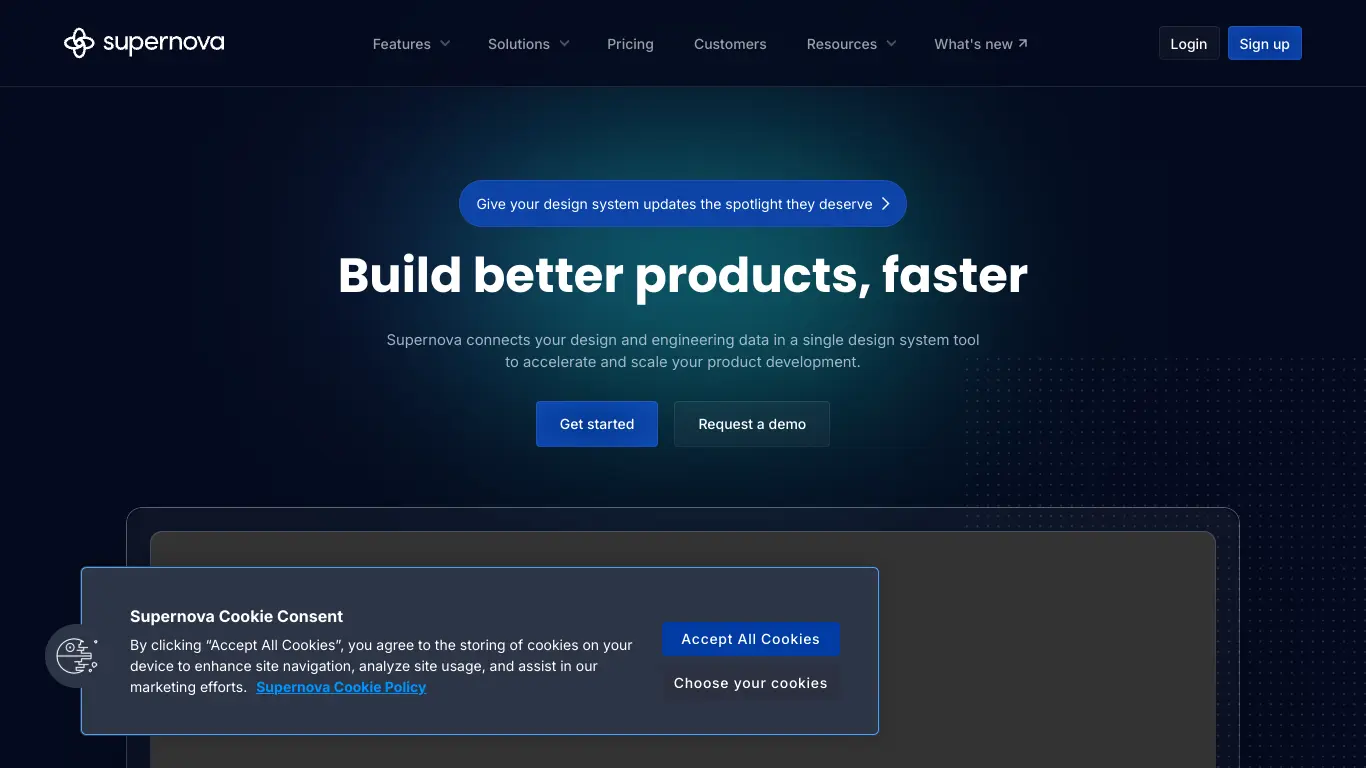
Are you tired of the disconnect between your design systems and actual code implementations? Do you struggle with keeping your design documentation in sync with your development process? If you’re nodding along, you’re experiencing a common pain point in modern digital product development that leads to inconsistency, wasted time, and frustrated team members. Supernova might be the solution you’ve been searching for. Let’s dive into this powerful design system platform that’s changing how teams bridge the gap between design and development.
Introduction to Supernova
What is Supernova and its Purpose?
Supernova is an advanced design system platform that transforms how teams create, maintain, and implement design systems. Unlike traditional design tools that stop at the visual stage, Supernova creates a continuous workflow between designers and developers by automating the handoff process and generating production-ready code from design components.
The platform’s core purpose is to solve one of the most persistent challenges in digital product development: the gap between design and code. Supernova ensures that your design system isn’t just a collection of static assets but a living, breathing single source of truth that directly powers your product development.
By connecting design tools like Figma to your codebase, Supernova helps maintain consistency across products while dramatically reducing the manual work typically required to implement design changes. It’s not just a design system tool—it’s a design system delivery platform.
Who is Supernova Designed For?
Supernova caters to several key stakeholders in the digital product development ecosystem:
- Design System Teams: Those responsible for creating and maintaining the company’s design language and component library
- Product Designers: Who need their designs implemented consistently and efficiently
- Developers: Who want reliable, production-ready code that matches design specifications
- Product Managers: Who benefit from faster development cycles and more consistent product experiences
- Large organizations: With multiple products and platforms that need design consistency
The platform is particularly valuable for mid-to-large companies with dedicated design systems or those in the process of scaling their design operations. If your team uses Figma and struggles with the design-to-development handoff, Supernova was built with you in mind.
Getting Started with Supernova: How to Use It
Getting up and running with Supernova follows a straightforward process:
- Sign up for an account: Visit Supernova.io and create your account.
- Connect your design source: Integrate with Figma (their primary design tool integration) to import your design components.
- Set up your design system: Organize your tokens, components, and documentation structure.
- Configure code generation: Set up your code delivery preferences based on your tech stack.
- Publish and share: Make your design system available to your team through documentation.
What makes Supernova unique is its ability to continuously sync with your design source. When your Figma components change, Supernova automatically updates—keeping everything in perfect harmony without manual intervention.
The platform offers extensive onboarding resources, including guided tutorials, documentation, and support to help teams adopt the system efficiently.
Supernova’s Key Features and Benefits
Core Functionalities of Supernova
Supernova’s platform revolves around several powerful capabilities that transform how design systems function:
🔄 Design Integration
- Seamless Figma synchronization that pulls in components, styles, and tokens
- Real-time updates when design changes occur
- Support for design token management and transformation
🛠️ Code Generation
- Automated generation of production-ready code for multiple platforms
- Customizable code delivery that adapts to your tech stack
- Support for various frameworks including React, Vue, Angular, iOS, and Android
📚 Documentation Engine
- Powerful documentation site builder with customizable themes
- Auto-generated component documentation with code examples
- Interactive component previews and playgrounds
🔌 Delivery Pipelines
- Automated export of design tokens to various formats (JSON, CSS, etc.)
- Integration with version control systems
- CI/CD friendly workflows for seamless deployment
🤝 Collaboration Tools
- Team management and permission controls
- Comment and feedback systems
- Version history and change tracking
Advantages of Using Supernova
The benefits of implementing Supernova extend across the entire product development lifecycle:
| Benefit | Description | Impact |
|---|---|---|
| Time Savings | Automates the manual work of translating design to code | Reduces development time by up to 60% |
| Design Consistency | Ensures perfect implementation of design specifications | Creates cohesive user experiences across products |
| Reduced Technical Debt | Prevents design drift between intended designs and implementation | Lower maintenance costs over time |
| Improved Collaboration | Creates a common language between designers and developers | Fewer misunderstandings and revisions |
| Future-Proof Workflow | Adapts as your design system evolves | Sustainable long-term solution |
| Single Source of Truth | Centralizes design system assets and documentation | Eliminates confusion about current standards |
Main Use Cases and Applications
Supernova shines in several specific scenarios:
Building and Scaling Design Systems
Teams use Supernova when establishing a new design system or scaling an existing one across multiple products. The platform provides the infrastructure to manage the system’s growth and evolution.
Modernizing Legacy Systems
Organizations with outdated design practices use Supernova to modernize their approach, creating a systematic, documented design language that can be consistently implemented.
Multi-Platform Development
For companies building products across web, iOS, Android, and other platforms, Supernova ensures design consistency while adapting to the technical requirements of each platform.
Design System Documentation
Teams create beautiful, interactive documentation that serves as both a reference and educational tool for designers and developers.
Automating Design-to-Development Workflow
By automating the translation of design to code, Supernova eliminates bottlenecks in the product development process, enabling faster iteration and delivery.
Exploring Supernova’s Platform and Interface
User Interface and User Experience
Supernova’s interface is designed for clarity and efficiency, balancing powerful features with intuitive navigation. The platform is organized into several key areas:
Dashboard
Your command center for accessing design systems and recent activities. The clean layout makes it easy to jump into ongoing projects or start new ones.
Design System Management
This is where you organize your design tokens, components, and other assets. The interface presents a hierarchical view that mimics how design systems are conceptually structured.
Documentation Editor
A WYSIWYG editor for creating beautiful documentation pages. The editor combines simplicity with powerful features like component embedding and interactive code examples.
Code Configuration
Here you’ll set up how your design system exports to code. The interface walks you through creating customized exporters that match your development requirements.
The overall UX philosophy emphasizes clarity and purpose—every screen has a clear function, and navigation follows logical patterns that experienced designers and developers will find familiar. The learning curve is moderate; users with design system experience will feel at home quickly, while newcomers may need a few hours to fully grasp the platform’s capabilities.
Platform Accessibility
Supernova offers multiple ways to access and use the platform:
Web Application
The primary interface is a web application accessible from any modern browser. This ensures team members can access the design system regardless of their operating system.
Design Tool Plugins
Supernova offers plugins for design tools (primarily Figma) that facilitate seamless integration and updates.
API Access
For teams wanting to build custom integrations, Supernova provides API access to programmatically interact with your design system data.
Documentation Sites
The generated documentation sites are responsive and accessible across devices, ensuring your team can reference the design system anywhere.
Mobile support is primarily focused on documentation consumption rather than system management, which aligns with typical workflow needs. The platform also includes accessibility considerations, though like many complex software tools, users with accessibility needs may face some challenges with certain advanced features.
Supernova Pricing and Plans
Subscription Options
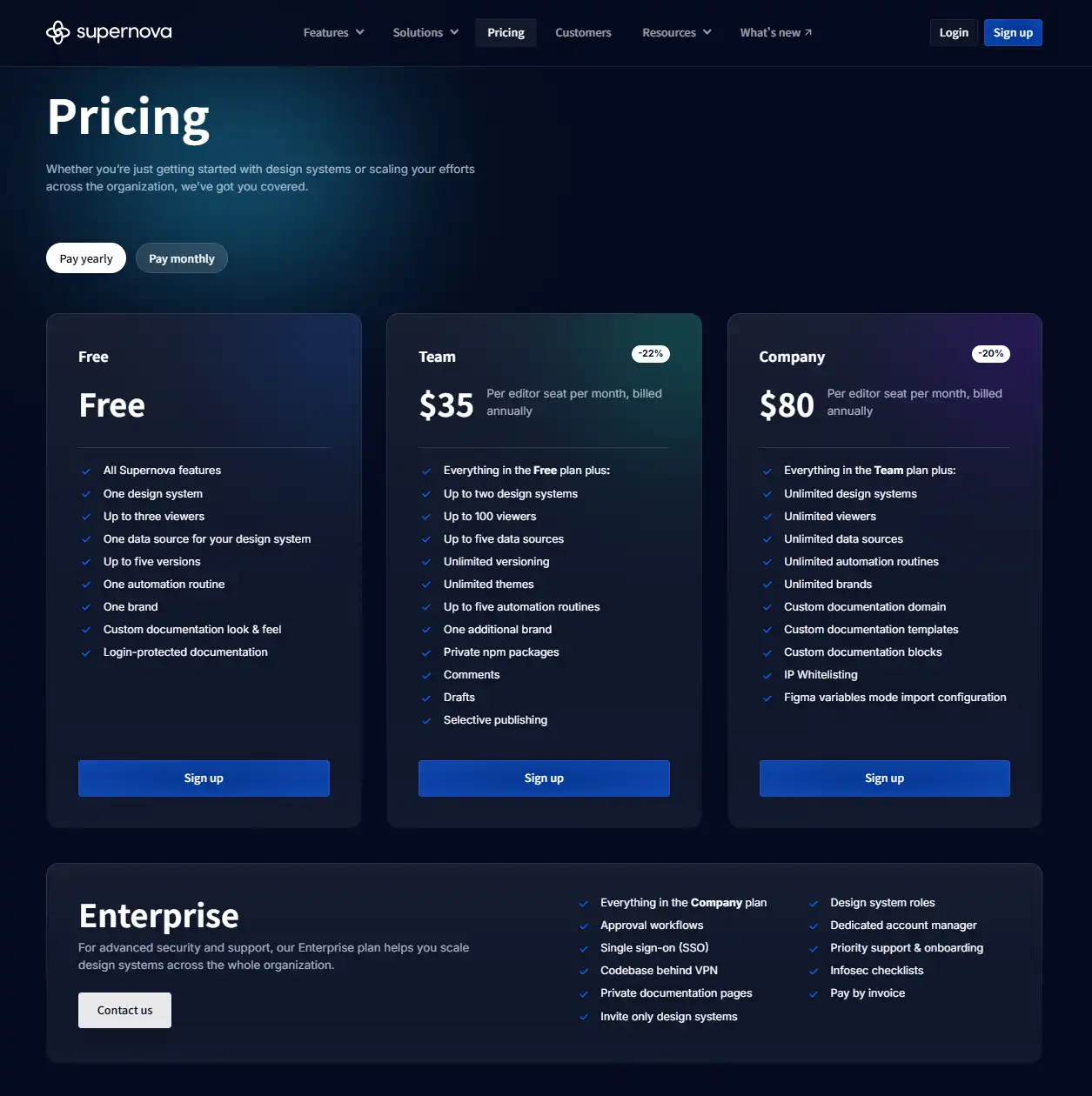
Supernova offers a tiered pricing structure designed to accommodate teams of different sizes and needs:

Supernova Reviews and User Feedback
Pros and Cons of Supernova
Based on user feedback and expert reviews, here’s a balanced assessment of Supernova’s strengths and limitations:
Pros:
- 🌟 Exceptional Figma integration that maintains design fidelity
- 🌟 Powerful, customizable code generation that produces production-quality output
- 🌟 Beautiful documentation capabilities with interactive examples
- 🌟 Continuous synchronization that eliminates manual updates
- 🌟 Thoughtful team collaboration features
- 🌟 Regular platform updates and responsive to feedback
Cons:
- ⚠️ Primarily focused on Figma, with limited support for other design tools
- ⚠️ Learning curve can be steep for teams new to design systems
- ⚠️ Some advanced customizations require technical knowledge
- ⚠️ Enterprise pricing may be prohibitive for smaller teams
- ⚠️ Mobile app experience is documentation-focused rather than comprehensive
User Testimonials and Opinions
Feedback from real users highlights how Supernova addresses practical challenges:
“Supernova has transformed how our design and development teams collaborate. What used to take days of back-and-forth now happens automatically. Our design system is finally a true single source of truth rather than just an aspiration.”
— Design Systems Lead at a Fortune 500 Company
“The documentation capabilities alone make Supernova worth it. We’ve gone from outdated Confluence pages to a beautiful, interactive reference that our entire company uses daily.”
— UX Designer at a SaaS Startup
“As a developer, I was skeptical about automated code generation—most tools produce garbage code. Supernova is different. The output is clean, follows our conventions, and actually saves me time rather than creating more work.”
— Frontend Developer at a Tech Company
“The learning curve was steeper than we expected, but the Supernova team was incredibly helpful during onboarding. Now that we’re up and running, we can’t imagine going back to our old process.”
— Product Manager at a Digital Agency
The sentiment across reviews is predominantly positive, with most criticisms focused on the initial learning curve rather than ongoing usage issues. Users particularly praise the platform’s ability to solve the persistent design-to-development handoff challenges that plague many product teams.
Supernova Company and Background Information
About the Company Behind Supernova
Supernova was founded in 2019 by Jiri Trecak and Vojtech Rinik, experienced product developers who personally experienced the frustrations of design-to-development handoffs. The company has its roots in a deep understanding of both design and development workflows, which informs the product’s approach to solving these cross-functional challenges.
Based in San Francisco with a distributed team across Europe and North America, Supernova has grown steadily and attracted attention for its innovative approach to design systems. The company has secured venture funding to support its mission of bridging the gap between design and development.
The Supernova team combines expertise from both the design and development worlds, creating a platform that genuinely understands the needs of both disciplines. This cross-functional DNA is evident in how the product balances technical capabilities with design-centric thinking.
Supernova maintains an active presence in the design systems community, regularly contributing to discussions, conferences, and thought leadership in this evolving field. Their blog and resource center reflect their commitment to advancing design system practices beyond just their platform.
Supernova Alternatives and Competitors
Top Supernova Alternatives in the Market
Several platforms compete with Supernova in different aspects of design system management:
- Zeroheight
- Focuses primarily on documentation rather than code generation
- Strong collaboration features
- https://zeroheight.com
- Storybook
- Developer-focused component documentation
- Open-source with extensive ecosystem
- https://storybook.js.org
- Knapsack
- Code-first design system platform
- Strong governance features
- https://www.knapsack.cloud
- Specify
- Specialized in design token management
- Strong automation capabilities
- https://specifyapp.com
- Backlight
- Focuses on code-based design systems
- Includes development environment
- https://backlight.dev
Supernova vs. Competitors: A Comparative Analysis
Each platform in this space has its unique approach and strengths:
| Platform | Primary Strength | Ideal For | Limitation |
|---|---|---|---|
| Supernova | Design-to-code automation | Teams using Figma seeking code generation | Limited design tool integrations beyond Figma |
| Zeroheight | Documentation & governance | Teams focused on documentation quality | Less emphasis on code generation |
| Storybook | Developer-centric documentation | Developer-led design systems | Requires more technical setup |
| Knapsack | Code-first approach | Engineering-driven organizations | Steeper learning curve for designers |
| Specify | Design token management | Teams with complex token needs | More specialized rather than all-in-one |
Supernova distinguishes itself through its end-to-end approach that spans from design tool integration to code delivery. While competitors often excel in specific aspects of design system management, Supernova aims to provide a comprehensive solution that addresses the entire workflow.
The choice between these platforms ultimately depends on your team’s specific needs, existing tools, and whether you prioritize design-led or development-led approaches to design systems.
Supernova Website Traffic and Analytics
Website Visit Over Time
Supernova has shown steady growth in website traffic over the past year, indicating increasing interest in design system platforms. While exact numbers aren’t publicly disclosed, industry analysis suggests:
- Year-over-year growth of approximately 65-75%
- Particularly strong interest following major product updates
- Consistent traffic to education and resource sections
- High engagement with case studies and documentation
This traffic pattern aligns with the growing adoption of design systems as a standard practice in product development.
Geographical Distribution of Users
Supernova’s user base shows an interesting global distribution:
- North America: ~40% (primarily US)
- Europe: ~35% (strong in UK, Germany, Netherlands)
- Asia-Pacific: ~15% (concentrated in Australia, Japan, Singapore)
- Rest of World: ~10%
This distribution reflects the global nature of design system adoption, with particular strength in technology hubs and regions with mature digital product industries.
Main Traffic Sources
The platform attracts users through several key channels:
- Direct Traffic: ~30% (indicating strong brand recognition)
- Organic Search: ~25% (design system related keywords)
- Referral: ~20% (from design blogs, Figma community, etc.)
- Social Media: ~15% (primarily Twitter/X and LinkedIn)
- Paid Campaigns: ~10% (targeted advertising)
The high percentage of direct and organic traffic suggests Supernova has established itself as a recognized name in the design systems space, while referrals indicate positive word-of-mouth within the design community.
Frequently Asked Questions about Supernova (FAQs)
General Questions about Supernova
What is Supernova?
Supernova is a design system platform that bridges the gap between design and development by automating the process of turning design components into production-ready code while generating comprehensive documentation.
How does Supernova differ from other design tools?
Unlike pure design tools, Supernova focuses on the implementation phase of design systems, helping transform designs into code and documentation rather than creating the designs themselves.
Can Supernova replace my design tool?
No, Supernova complements rather than replaces design tools like Figma. It works with your existing design process to enhance the delivery and implementation of your designs.
Feature Specific Questions
Which design tools does Supernova integrate with?
Supernova primarily integrates with Figma, offering deep synchronization capabilities. Limited support for other tools may be available, but Figma integration is the most robust.
What programming languages and frameworks does Supernova support?
Supernova can generate code for a wide range of technologies including React, Vue, Angular, React Native, Swift (iOS), Kotlin (Android), and plain CSS/HTML. The code exporters are customizable to match your specific coding standards.
Can I customize my documentation site with Supernova?
Yes, Supernova offers extensive customization options for documentation sites, including theming, navigation structure, custom domains, and interactive components.
Pricing and Subscription FAQs
Is there a free plan available?
Yes, Supernova offers a free plan with limited features that’s suitable for individuals or small teams just getting started with design systems.
How does the pricing work for larger teams?
Professional plans are priced per editor (team members who create or edit content), while viewers (those who only consume the documentation) are unlimited. Enterprise plans offer customized pricing based on specific organizational needs.
Can I upgrade or downgrade my subscription?
Yes, you can change your subscription at any time. When upgrading, you’ll gain immediate access to new features. When downgrading, changes take effect at the end of the current billing cycle.
Support and Help FAQs
What kind of support does Supernova provide?
Support varies by plan. Free users access community support, Professional users receive priority email support, and Enterprise customers get dedicated support channels including access to customer success managers.
Is there training available for new users?
Yes, Supernova provides extensive documentation, tutorial videos, and getting started guides. Enterprise customers receive customized onboarding and training sessions.
How often is Supernova updated?
Supernova follows a regular update cycle, typically releasing new features and improvements monthly, with minor updates and fixes more frequently.
Conclusion: Is Supernova Worth It?
Summary of Supernova’s Strengths and Weaknesses
After thoroughly examining Supernova’s capabilities, pricing, and user feedback, here’s a balanced assessment:
Key Strengths:
- Solves a genuine, persistent problem in the product development workflow
- Exceptional integration with Figma that maintains design fidelity
- Production-quality code generation that adapts to your tech stack
- Beautiful, customizable documentation that serves both designers and developers
- Continuous synchronization that eliminates manual updates and version conflicts
- Regular updates and responsive product development
Notable Limitations:
- Best suited for teams already using Figma; less valuable for other design tool users
- Requires investment in proper setup and configuration to maximize value
- Some advanced customizations demand technical expertise
- Higher tiers can be costly for smaller organizations
- Mobile experience prioritizes documentation consumption over system management
Final Recommendation and Verdict
Supernova represents a significant advancement in design system tooling, particularly for organizations struggling with the design-to-development handoff. For teams already invested in Figma and committed to implementing a design system at scale, Supernova offers tremendous value by automating tedious processes and ensuring consistency.
For small teams or those just beginning their design system journey, the free plan provides an excellent entry point to explore the platform’s capabilities without financial commitment. As your design system matures and scales, the paid tiers unlock capabilities that quickly justify their cost through time savings and quality improvements.
Organizations that prioritize different design tools or have heavily customized development workflows may find Supernova less immediately valuable, though the platform’s flexibility often allows for adaptation to various scenarios.
Ultimately, Supernova shines brightest for mid-to-large organizations serious about scaling design systems across products and platforms. If the gap between your design vision and development implementation is causing friction, delays, or inconsistency, Supernova offers a comprehensive solution that can transform this challenging aspect of digital product development.
In a landscape where design systems are increasingly critical to business success, Supernova stands out as a mature, thoughtful platform that addresses real-world challenges with practical, powerful solutions.