
Kameleoon is an enterprise-grade A/B testing and AI personalization platform that helps businesses optimize digital experiences and increase conversions.
Kameleoon
P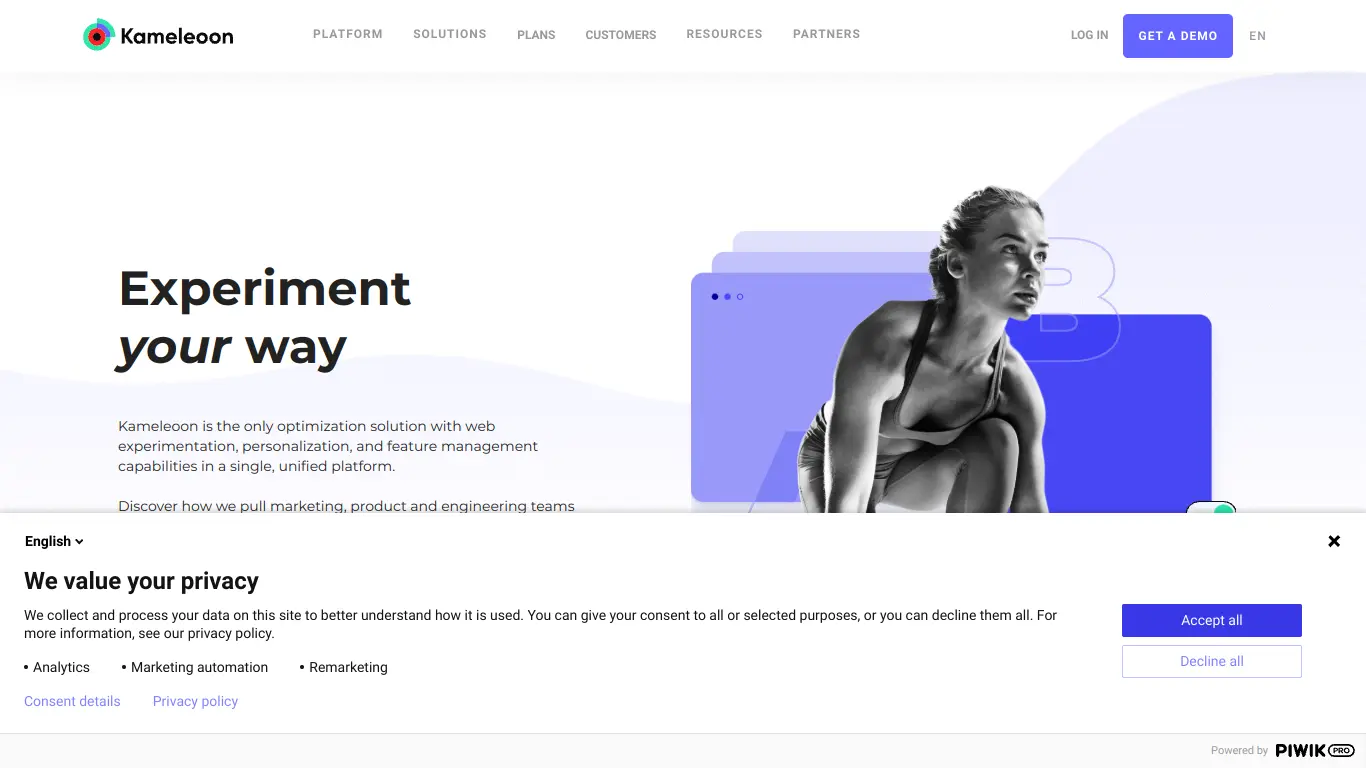 ersonalizing user experiences and optimizing conversion rates have become mission-critical for businesses. If you’ve been struggling with flat conversion rates despite decent traffic numbers, or if you’re tired of making design decisions based on gut feelings rather than data, you’re not alone. Many marketers and product teams face these challenges daily. This is where an AI-powered experimentation and personalization platform like Kameleoon enters the picture, promising to transform how businesses optimize their digital experiences.
Introduction to Kameleoon
What is Kameleoon and its Purpose?
Kameleoon is an advanced AI-powered experimentation and personalization platform designed to help businesses optimize their digital experiences. At its core, Kameleoon enables companies to run sophisticated A/B tests, multivariate tests, and deploy personalized experiences across websites, web applications, and mobile apps without requiring extensive developer resources.
The platform’s primary purpose is to help businesses make data-driven decisions rather than relying on assumptions or gut feelings. It does this by allowing teams to test hypotheses about what works best for their audience and then implement winning variations to improve conversions, engagement, and revenue.
What sets Kameleoon apart is its powerful combination of experimentation capabilities and AI-driven personalization features. Using machine learning algorithms, the platform can automatically identify and target user segments with tailored experiences, making personalization efforts more efficient and effective.
Who is Kameleoon Designed For?
Kameleoon caters to a diverse range of professionals and organizations:
-
Marketing Teams: Digital marketers use Kameleoon to optimize campaigns, landing pages, and customer journeys to maximize conversion rates and ROI.
-
Product Managers: Product teams implement Kameleoon to test new features, validate product ideas, and continuously improve user experiences based on real data.
-
E-commerce Businesses: Online retailers leverage Kameleoon to personalize shopping experiences, optimize checkout flows, and increase average order values.
-
Enterprise Organizations: Large companies with complex digital infrastructures use Kameleoon’s enterprise-grade features for sophisticated testing programs across multiple domains and products.
-
Agencies: Digital agencies implement Kameleoon for their clients to demonstrate measurable improvements in conversion rates and user engagement.
The platform is particularly valuable for mid-market and enterprise businesses that have sufficient traffic volumes to gather statistically significant data in a reasonable timeframe and that seek to build a culture of experimentation.
Getting Started with Kameleoon: How to Use It
Getting started with Kameleoon follows a straightforward process:
-
Implementation: After signing up, you’ll need to add Kameleoon’s JavaScript tag to your website or application. The platform offers multiple integration options including Google Tag Manager implementation, direct code insertion, or server-side integration.
-
Create an Experiment: Use Kameleoon’s visual editor to create variations of your pages without coding. For more complex changes, you can use the code editor that supports JavaScript, CSS, and HTML modifications.
-
Define Your Audience: Specify which users should participate in your experiment based on various targeting criteria like visitor source, behavior, or custom segments.
-
Set Goals: Define what success looks like by selecting primary and secondary conversion goals from pageviews, clicks, transactions, revenue, or custom events.
-
Launch and Monitor: Activate your experiment and use Kameleoon’s real-time dashboard to monitor performance metrics, including statistical significance calculations.
-
Analyze and Implement: Once your experiment reaches conclusive results, analyze the data and implement winning variations permanently through your website’s code or using Kameleoon’s personalization features.
The platform offers comprehensive onboarding resources, including documentation, video tutorials, and customer success support to help new users get up to speed quickly.
Kameleoon’s Key Features and Benefits
Core Functionalities of Kameleoon
Kameleoon offers a robust suite of features designed to support comprehensive experimentation and personalization programs:
A/B Testing and Multivariate Testing
- Visual editor for creating variations without coding
- Advanced statistical engine with Bayesian and Frequentist methodologies
- Traffic allocation controls and experiment scheduling
- Cross-device and cross-browser consistency checks
AI-Powered Personalization
- Machine learning algorithms that predict user behavior
- Automated segment discovery and targeting
- Real-time personalization based on user attributes and behaviors
- Dynamic content delivery based on predictive analysis
Targeting and Segmentation
- Behavioral targeting based on user actions
- Contextual targeting (device, location, etc.)
- Custom audience creation using first-party data
- Integration with CRM and CDP platforms for deeper segmentation
Analytics and Reporting
- Real-time results dashboard
- Detailed conversion metrics and revenue tracking
- Segment performance breakdowns
- Integration with Google Analytics, Adobe Analytics, and other analytics tools
Developer Tools
- Server-side experimentation capabilities
- APIs for custom integrations
- SDK for mobile app testing
- Feature flag management for controlled rollouts
Enterprise Features
- Multi-user roles and permissions
- Experiment QA tools
- Approval workflows
- Data security and compliance features
Advantages of Using Kameleoon
Using Kameleoon offers several compelling benefits for organizations committed to optimization:
1. Accelerated Decision-Making
Kameleoon reduces the time needed to validate hypotheses and implement improvements. Instead of lengthy debates about design changes, teams can quickly test ideas and let data determine the winners.
2. Increased Conversion Rates
Companies using Kameleoon regularly report significant increases in conversion rates. According to their case studies, clients have achieved improvements ranging from 15-40% in key conversion metrics.
3. Higher ROI on Marketing Spend
By optimizing landing pages and user journeys, Kameleoon helps companies extract more value from their existing traffic, effectively lowering customer acquisition costs.
4. Reduced Development Resources
The visual editor allows marketers to create and test variations without constant development support, freeing technical resources for more complex projects.
5. Personalized Customer Experiences
Kameleoon’s AI-driven personalization enables delivering tailored experiences at scale, improving customer satisfaction and loyalty.
6. Data-Driven Culture
Implementing Kameleoon often catalyzes a shift toward more data-informed decision-making across organizations, extending beyond just website optimization.
Main Use Cases and Applications
Kameleoon is versatile enough to support numerous use cases across different industries:
E-commerce Optimization
- Shopping cart abandonment reduction
- Product page conversion optimization
- Personalized product recommendations
- Checkout flow streamlining
- Promotional banner testing
SaaS and Subscription Businesses
- Signup flow optimization
- Pricing page testing
- Feature adoption enhancement
- Upgrade path optimization
- User onboarding improvements
Financial Services
- Application form optimization
- Calculator and tool testing
- Cross-selling enhancement
- Compliance-friendly personalization
- Mobile banking experience improvement
Media and Publishing
- Subscription conversion optimization
- Content recommendation testing
- Ad placement optimization
- Paywall strategy refinement
- User engagement enhancement
Travel and Hospitality
- Booking funnel optimization
- Upsell opportunity testing
- Personalized destination recommendations
- Mobile booking experience enhancement
- Loyalty program optimization
Exploring Kameleoon’s Platform and Interface
User Interface and User Experience
Kameleoon’s interface strikes a balance between powerful functionality and usability, designed to accommodate both technical and non-technical users:
Dashboard and Navigation
The central dashboard provides a comprehensive overview of active experiments, personalization campaigns, and key performance metrics. The navigation is intuitive, with a logical hierarchy that groups related functions together.
Visual Editor
Kameleoon’s visual editor allows users to:
- Select and modify page elements through point-and-click functionality
- Rearrange, hide, or emphasize content without coding
- Preview how changes will appear across different devices
- Apply conditional changes based on targeting criteria
The editor includes a user-friendly interface that resembles popular design tools, making it accessible to marketers with no coding experience.
Code Editor
For more complex modifications, Kameleoon offers a code editor that supports:
- JavaScript modifications
- CSS styling changes
- HTML structure alterations
- Variable definition and manipulation
The code editor includes syntax highlighting and error checking to assist developers in creating more sophisticated test variations.
Results and Analytics Interface
The results section presents experiment data through:
- Clear visualization of key metrics
- Statistical significance indicators
- Segmentation breakdowns
- Conversion funnel analysis
- Trend graphs showing performance over time
The interface makes it easy to quickly understand which variations are winning and why, with options to dig deeper into the data as needed.
Platform Accessibility
Kameleoon has invested in making their platform accessible across different contexts:
Browser Compatibility
The platform works seamlessly across all major browsers, including Chrome, Firefox, Safari, and Edge.
Mobile Accessibility
While Kameleoon’s management interface is primarily designed for desktop use, users can monitor experiment results on mobile devices. The platform itself enables testing and personalization across both desktop and mobile user experiences.
Language Support
Kameleoon’s interface is available in multiple languages, including English, French, German, and Spanish, catering to its international user base.
Knowledge Base and Support
Comprehensive documentation, tutorials, and webinars are available to help users master the platform. The knowledge base includes search functionality and is organized logically by topic and use case.
Integration Ecosystem
Kameleoon integrates with numerous other platforms in the marketing technology stack:
- Analytics tools (Google Analytics, Adobe Analytics)
- Customer data platforms (Segment, Tealium)
- CRM systems (Salesforce, HubSpot)
- Content management systems (WordPress, Drupal)
These integrations enhance accessibility by allowing Kameleoon to fit smoothly into existing workflows and data ecosystems.
Kameleoon Pricing and Plans
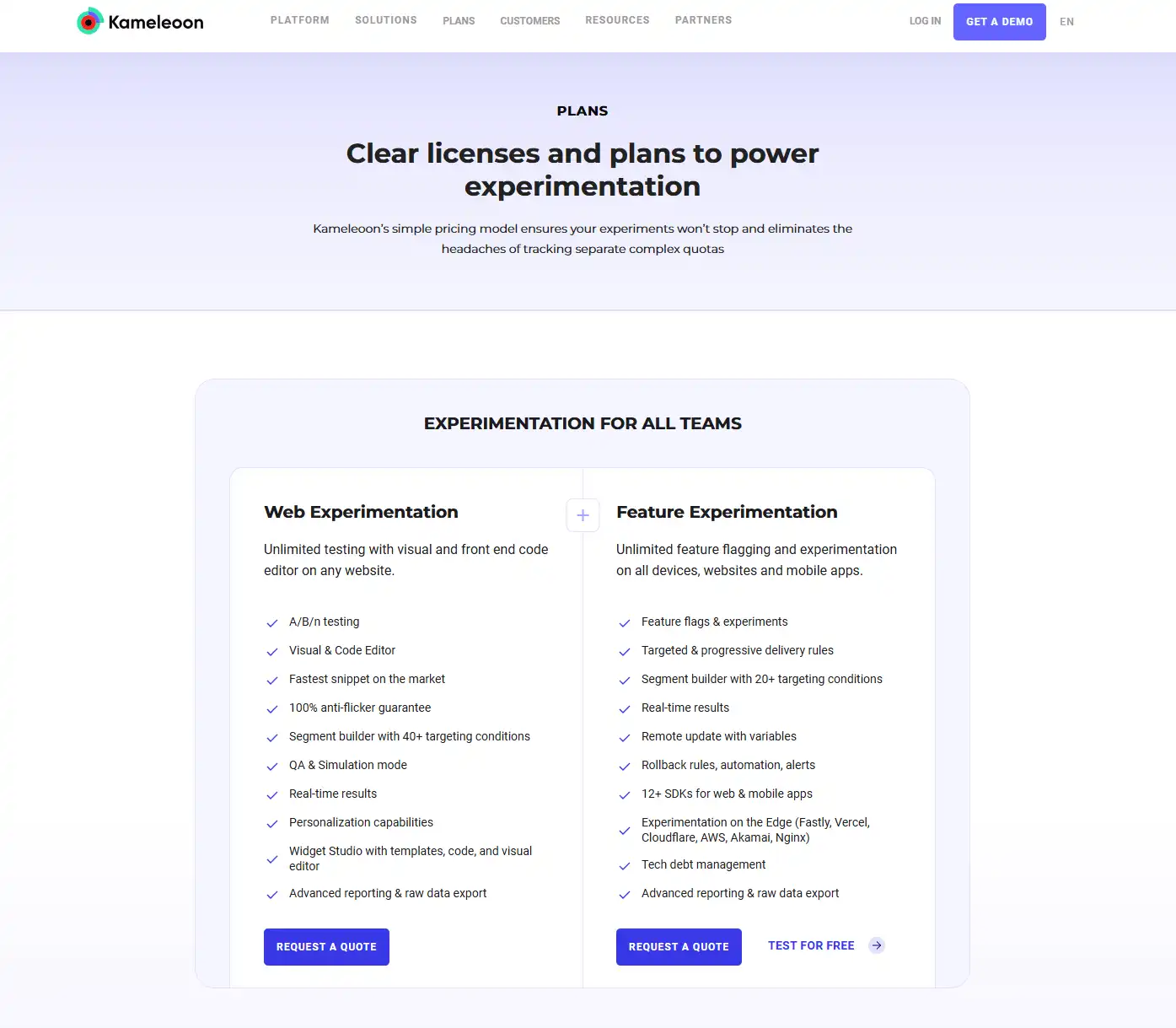
Kameleoon Reviews and User Feedback
Pros and Cons of Kameleoon
Based on aggregated user reviews and industry analysis, here’s a balanced assessment of Kameleoon’s strengths and limitations:
Pros:
✅ Powerful Visual Editor: Users consistently praise the intuitive interface that allows for sophisticated test creation without coding skills.
✅ Advanced AI Capabilities: The predictive personalization features receive high marks for their ability to automatically identify and target valuable user segments.
✅ Statistical Rigor: The platform’s statistical engine is highlighted for its accuracy and flexibility, offering both Bayesian and Frequentist methodologies.
✅ Enterprise-Grade Security: Organizations in regulated industries appreciate Kameleoon’s strong security features and compliance capabilities.
✅ Quality Support: Customer support receives consistently positive feedback, particularly the dedicated customer success managers provided to enterprise clients.
✅ Server-Side Capabilities: Developers value the robust server-side testing options that allow for more complex experimentation scenarios.
Cons:
❌ Learning Curve: Some users mention that fully mastering the platform’s more advanced features requires significant time investment.
❌ Price Point: Smaller organizations occasionally cite Kameleoon’s pricing as a barrier, noting it’s positioned as a premium solution.
❌ Mobile App Testing Limitations: While mobile website testing is strong, some users wish for more comprehensive native app testing capabilities.
❌ Documentation Gaps: A few users mention that while documentation is extensive, finding specific information can sometimes be challenging.
❌ Integration Complexity: Some integrations require developer resources to implement fully, which can be a hurdle for marketing-led teams.
User Testimonials and Opinions
Real users share diverse perspectives on their experiences with Kameleoon:
“We’ve been using Kameleoon for over two years now, and it’s been instrumental in our growth. The AI personalization features have helped us increase our conversion rates by 23% year-over-year. What impressed me most was how the platform grew with us—starting from basic A/B tests to now running complex personalization programs.” – Marketing Director at a mid-sized e-commerce company
“As the person responsible for implementing Kameleoon, I found the initial setup straightforward, but some of the more advanced integrations required more development resources than we initially anticipated. That said, their support team was extremely helpful throughout the process.” – Technical Project Manager at a SaaS company
“Kameleoon has transformed how we make decisions. Instead of lengthy debates about design changes, we now test everything. The statistical engine gives us confidence in the results, and the visual editor means our marketing team can create variations without constantly needing developer help.” – Conversion Optimization Specialist at a financial services firm
“While the platform is powerful, we found the pricing to be on the higher side compared to some competitors. However, the ROI has justified the cost—we’ve seen a 15% improvement in our core conversion metrics since implementation.” – Digital Strategy Director at a retail brand
Industry analysts and review platforms generally place Kameleoon among the top tier of experimentation and personalization platforms, particularly highlighting its strength for enterprise users and organizations with sophisticated testing needs.
Kameleoon Company and Background Information
About the Company Behind Kameleoon
Kameleoon was founded in 2012 in Paris, France, by Jean-René Boidron, who identified a market need for more powerful and accessible A/B testing and personalization tools. The company’s name cleverly references the chameleon’s ability to adapt to its environment—mirroring how the platform helps businesses adapt their digital experiences to different users.
Company Growth and Funding
Kameleoon has experienced significant growth since its founding:
- In 2016, the company secured €2 million in Series A funding
- A larger €5 million Series B round followed in 2019
- The company expanded from its French origins to establish offices in Germany, the UK, and the US
Leadership and Team
The company is led by a management team with deep expertise in digital marketing, software development, and data science:
- CEO: Jean-René Boidron (Founder)
- CTO: Frédéric De Todaro
- Chief Product Officer: Jean-Noël Rivasseau
Kameleoon employs approximately 70-80 people across its global offices, with a significant portion of the team dedicated to product development and customer success.
Company Philosophy
Kameleoon’s corporate philosophy centers on several key principles:
- Data-driven decision making
- Continuous innovation in AI and machine learning
- Enterprise-grade reliability and security
- Customer-centric product development
The company places a strong emphasis on helping clients build a culture of experimentation rather than just providing software tools.
Notable Clients
Kameleoon serves hundreds of mid-market and enterprise customers across various industries, including:
- Retail and E-commerce: LVMH, Toyota, Lexus
- Financial Services: Generali
- Technology: Cdiscount
- Media: Axel Springer
- Travel: Pierre & Vacances
The platform processes billions of user interactions monthly across its client base, providing a robust dataset that informs its AI algorithms and product development.
Kameleoon Alternatives and Competitors
Top Kameleoon Alternatives in the Market
Several platforms compete with Kameleoon in the experimentation and personalization space, each with its unique strengths:
1. Optimizely
Optimizely is one of the most established players in the experimentation market, offering a comprehensive digital experience platform with strong testing capabilities and content management features.
2. VWO (Visual Website Optimizer)
VWO provides an integrated conversion optimization platform with A/B testing, on-page surveys, and heatmapping functionality at a price point often attractive to mid-market companies.
3. AB Tasty
AB Tasty offers similar European-based experimentation and personalization capabilities with a focus on user-friendly interfaces and AI-powered recommendations.
4. Dynamic Yield
Dynamic Yield (acquired by Mastercard) specializes in personalization for e-commerce and retail, with strong merchandising capabilities and recommendation engines.
5. Convert
Convert positions itself as a privacy-focused A/B testing tool with GDPR compliance built-in, appealing to organizations with strict data privacy requirements.
6. Google Optimize
Google Optimize offers basic A/B testing capabilities with deep Google Analytics integration, though Google has announced its discontinuation in 2023.
Kameleoon vs. Competitors: A Comparative Analysis
| Feature | Kameleoon | Optimizely | VWO | AB Tasty |
|---|---|---|---|---|
| Visual Editor | ⭐⭐⭐⭐⭐ | ⭐⭐⭐⭐ | ⭐⭐⭐⭐ | ⭐⭐⭐⭐ |
| AI Capabilities | ⭐⭐⭐⭐⭐ | ⭐⭐⭐⭐ | ⭐⭐⭐ | ⭐⭐⭐⭐ |
| Server-Side Testing | ⭐⭐⭐⭐⭐ | ⭐⭐⭐⭐⭐ | ⭐⭐⭐ | ⭐⭐⭐ |
| Enterprise Features | ⭐⭐⭐⭐ | ⭐⭐⭐⭐⭐ | ⭐⭐⭐ | ⭐⭐⭐⭐ |
| Ease of Implementation | ⭐⭐⭐⭐ | ⭐⭐⭐ | ⭐⭐⭐⭐ | ⭐⭐⭐⭐ |
| Statistical Engine | ⭐⭐⭐⭐⭐ | ⭐⭐⭐⭐ | ⭐⭐⭐⭐ | ⭐⭐⭐⭐ |
| Pricing Value | ⭐⭐⭐ | ⭐⭐ | ⭐⭐⭐⭐ | ⭐⭐⭐ |
| Customer Support | ⭐⭐⭐⭐ | ⭐⭐⭐ | ⭐⭐⭐⭐ | ⭐⭐⭐⭐ |
Key Differentiators:
Kameleoon distinguishes itself from competitors in several ways:
-
AI-Powered Personalization: Kameleoon’s predictive algorithms for automatic segment targeting and personalization are frequently cited as more advanced than many competitors.
-
European Foundations: As a European-born platform, Kameleoon was built with GDPR and privacy considerations from the ground up, which appeals to privacy-conscious organizations.
-
Balanced Approach: Kameleoon occupies a middle ground between enterprise-focused platforms like Optimizely (which can be more complex and expensive) and simpler tools like Google Optimize (which offer fewer features).
-
Statistical Methodology Options: The ability to switch between Bayesian and Frequentist statistical approaches gives users flexibility that many competitors don’t offer.
-
Developer Experience: The platform receives strong reviews for its developer-friendly features, including APIs, SDKs, and server-side testing capabilities.
When choosing between Kameleoon and alternatives, organizations should consider:
- Available budget
- Technical resources
- Experimentation program maturity
- Specific use cases (e-commerce, SaaS, etc.)
- Integration requirements with existing tech stack
Kameleoon Website Traffic and Analytics
Website Visit Over Time
Kameleoon’s corporate website demonstrates healthy traffic patterns indicative of a growing B2B SaaS company:
- Monthly Visitors: Approximately 50,000-70,000 unique visitors per month
- Traffic Trend: Steady year-over-year growth of approximately 15-20%
- Seasonal Patterns: Traffic typically peaks during Q1 and Q4, aligning with budget planning cycles
- Page Views Per Visit: Average of 3.2 pages per session
- Average Session Duration: Approximately 2:45 minutes
📈 The website has seen particular traffic growth following major product announcements and the expansion of their thought leadership content.
Geographical Distribution of Users
Kameleoon’s website traffic reflects its business expansion from European roots to a more global presence:
Top Countries by Traffic Volume:
- 🇫🇷 France: 25%
- 🇩🇪 Germany: 18%
- 🇬🇧 United Kingdom: 16%
- 🇺🇸 United States: 15%
- 🇪🇸 Spain: 6%
- 🇮🇹 Italy: 5%
- 🇳🇱 Netherlands: 3%
- 🇨🇦 Canada: 2%
- 🇦🇺 Australia: 2%
- 🇮🇳 India: 1%
The remaining 7% is distributed across various countries globally, with growing representation from Asia-Pacific regions.
Main Traffic Sources
Kameleoon attracts website visitors through diverse channels, reflecting a balanced digital marketing strategy:
Traffic Source Breakdown:
- Organic Search: 42% (primarily from experimentation and personalization-related keywords)
- Direct Traffic: 25% (indicating strong brand recognition)
- Referral Traffic: 15% (from technology partners, review sites, and industry publications)
- Paid Search: 10% (targeted campaigns for key conversion terms)
- Social Media: 5% (primarily LinkedIn and Twitter)
- Email Marketing: 3% (newsletters and nurture campaigns)
The high proportion of organic traffic suggests effective SEO strategies and content marketing, while the direct traffic indicates growing brand awareness in the experimentation and personalization space.
Frequently Asked Questions about Kameleoon (FAQs)
General Questions about Kameleoon
Q: What exactly is Kameleoon?
A: Kameleoon is an AI-powered experimentation and personalization platform that helps businesses optimize their digital experiences through A/B testing, multivariate testing, and personalized content delivery based on user behavior and characteristics.
Q: Is Kameleoon suitable for small businesses?
A: While Kameleoon can technically be implemented by businesses of any size, its pricing and feature set are most aligned with mid-market and enterprise companies that have sufficient traffic volumes to gather meaningful test data and dedicated resources for optimization programs.
Q: Does Kameleoon work with single-page applications (SPAs)?
A: Yes, Kameleoon offers specific capabilities for testing and personalizing single-page applications built with frameworks like React, Angular, or Vue.js. The platform includes both client-side and server-side implementation options for SPAs.
Q: Is Kameleoon GDPR compliant?
A: Yes, Kameleoon was built with GDPR compliance in mind. The platform offers features like consent management integration, data anonymization options, and EU-based data storage to help companies maintain compliance with European privacy regulations.
Feature Specific Questions
Q: Can I run tests on mobile apps with Kameleoon?
A: Kameleoon offers SDKs for iOS and Android that enable experimentation and personalization in native mobile applications. These SDKs support A/B testing, feature flags, and personalized experiences within mobile apps.
Q: How does Kameleoon’s AI personalization actually work?
A: Kameleoon’s AI engine analyzes user behavior patterns and characteristics to identify segments that are likely to respond differently to variations. The system automatically directs users to the experience most likely to result in conversion based on their behavioral patterns, leveraging both historical and real-time data.
Q: Can Kameleoon integrate with my existing tech stack?
A: Kameleoon offers numerous pre-built integrations with popular platforms including Google Analytics, Adobe Analytics, Segment, Tealium, and many content management systems. Additionally, their REST API and webhooks allow for custom integrations with virtually any platform.
Q: What statistical methods does Kameleoon use?
A: Kameleoon allows users to choose between Bayesian and Frequentist statistical methodologies. The Bayesian approach is often preferred for its ability to provide meaningful insights earlier in the testing process, while the Frequentist approach follows traditional statistical significance calculations.
Pricing and Subscription FAQs
Q: How much does Kameleoon typically cost?
A: Kameleoon’s pricing starts at approximately $1,200/month for the Growth plan and scales based on page views and feature requirements. Enterprise plans with full AI personalization capabilities typically start at several thousand dollars per month. Exact pricing requires contacting their sales team for a customized quote.
Q: Is there a free version of Kameleoon?
A: Kameleoon doesn’t offer a permanent free version, but they do provide a 30-day free trial that includes access to most platform features. They also offer free demonstrations and consultations.
Q: What factors affect Kameleoon’s pricing?
A: The main factors that influence pricing include:
- Monthly page view volume
- Feature set required (basic testing vs. advanced personalization)
- Number of domains to be tested
- Implementation type (client-side, server-side, or hybrid)
- Support and service level requirements
Q: Do I need to sign a long-term contract for Kameleoon?
A: Kameleoon typically offers both annual and multi-year contracts, with annual contracts being the most common. Longer-term commitments usually come with pricing advantages. Month-to-month options may be available for smaller implementations but are less common.
Support and Help FAQs
Q: What kind of support does Kameleoon provide?
A: Support options vary by plan level:
- All customers receive access to documentation, knowledge base, and email support
- Pro and Enterprise customers receive phone support
- Enterprise customers are assigned dedicated Customer Success Managers
- Professional services for implementation and strategic guidance are available as add-ons
Q: Does Kameleoon offer training for new users?
A: Yes, Kameleoon provides several training options:
- Standard onboarding sessions for all new customers
- Online certification programs
- Custom training workshops for enterprise clients
- Regular webinars and knowledge-sharing sessions
- On-demand video tutorials
Q: How quickly can I implement Kameleoon?
A: Basic implementation typically takes 1-2 days with a developer’s assistance for adding the JavaScript tag and setting up initial integrations. Full implementation including strategic setup and integration with existing workflows usually takes 2-4 weeks, depending on complexity.
Q: Where can I find documentation for Kameleoon?
A: Comprehensive documentation is available at Kameleoon’s Help Center, accessible through their website. This includes implementation guides, feature documentation, API references, and best practices.
Conclusion: Is Kameleoon Worth It?
Summary of Kameleoon’s Strengths and Weaknesses
Key Strengths:
-
Advanced AI Capabilities: Kameleoon’s predictive personalization technology stands out in the market, offering automated segment discovery and targeting that reduces manual work while improving results.
-
Flexibility for Different Users: The platform successfully balances accessibility for marketers (through the visual editor) with powerful capabilities for developers (via server-side testing and APIs).
-
Statistical Rigor: The dual statistical methodologies and advanced experiment design options provide confidence in results, which is crucial for data-driven organizations.
-
Enterprise-Ready Features: Strong security, user permissions, and workflow features make Kameleoon suitable for large organizations with complex requirements.
-
European Privacy Focus: Built with GDPR compliance in mind, Kameleoon offers advantages for privacy-conscious organizations, particularly those operating in European markets.
Key Weaknesses:
-
Price Point: The premium positioning makes Kameleoon less accessible to smaller businesses or those just beginning their experimentation journey.
-
Learning Curve: Mastering the full capabilities of the platform requires time investment and potentially specialized skills, particularly for advanced personalization scenarios.
-
Mobile App Testing Limitations: While improving, the mobile app testing capabilities aren’t as mature as the web testing features.
-
Resource Requirements: Getting the most value from Kameleoon typically requires dedicated optimization resources, which smaller teams may struggle to allocate.
Final Recommendation and Verdict
Kameleoon represents an excellent investment for mid-market and enterprise organizations committed to building sophisticated experimentation and personalization programs. The platform delivers particular value in these scenarios:
- For companies transitioning from basic testing to more advanced experimentation
- For organizations seeking to reduce reliance on development resources for optimization
- For businesses in regulated industries requiring strong security and privacy features
- For marketing teams wanting to leverage AI for personalization without data science expertise
However, Kameleoon may not be the ideal choice for:
- Small businesses with limited traffic or optimization budgets
- Organizations seeking the absolute lowest-cost testing solution
- Teams without dedicated resources for optimization programs
- Companies primarily focused on mobile app (rather than web) optimization
The Final Verdict: 4.5/5 stars ⭐⭐⭐⭐½
Kameleoon earns a strong recommendation for its powerful combination of testing capabilities, AI-driven personalization, and enterprise-grade features. While not the most affordable option in the market, companies that make the investment and commit to using the platform strategically can expect significant returns through improved conversion rates and more personalized user experiences.
For organizations with the traffic volumes, budget, and commitment to building a data-driven optimization program, Kameleoon represents one of the top options available in today’s market—balancing sophisticated capabilities with usability in a way that few competitors can match.